
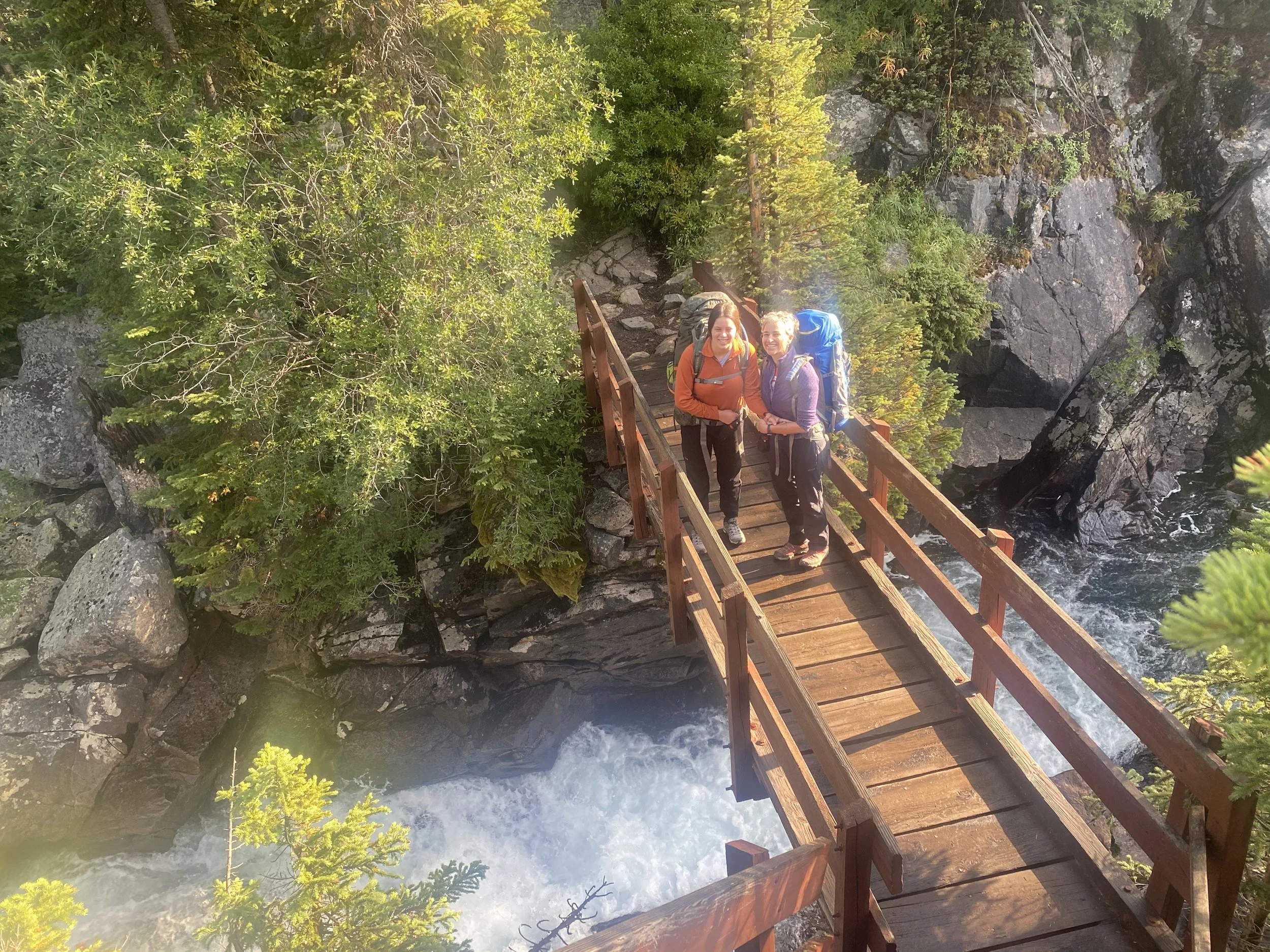
Trail Trip INFO and FAQs
Please review the following information and frequently asked questions before registering or applying for a stewardship trip. If you have any questions after reading this information, please email us at volunteer@abwilderness.org.
The following information is divided into five sections: the work, required experience, signing up, gear and food, and policies and preparedness.
The WORK
-
Although each stewardship trip may include any type of trail work, each trip is planned around a primary type of work, and familiarizing yourself with the types of stewardship work we conduct will help give you an idea of what to expect on your upcoming volunteer adventure.
Trail Clearing
Opening trails by cutting and removing fallen trees using traditional tools like crosscut saws and folding saws.Trail Maintenance
Installing or repairing irrigation features like water bars and lateral drains, repairing or improving trail tread, and clearing trails of overgrowth. Tools used include shovels, pickaxes, pulaskis, and loppers.
Habitat Restoration
Identifying and removing invasive weeds to improve habitat and allow native plants to thrive. Involves pulling, cutting, and bagging weeds like hounds tongue, knapweed, and thistle. Tools used include spades, shears, and loppers.Construction
Project-based work such as building switchbacks, putting in a puncheon over a wetland, or installing a culvert. Wide variety of tools used, from saws and hammers to sledge hammers.
Stewardship Tours
Stewardship tours mix data collection and wilderness education with light trail work. Participants collect rigorous human-use data on specified trail segments while removing trees, clearing waterbars, removing illegal fire rings, and educating wilderness users as needed. These trips tend to cover a lot of ground and require more wilderness experience. -
The difficulty ratings here are our best attempt to categorize the expected challenge level of the hiking you’ll encounter on any of our projects. Of course, every individual’s ability and energy levels are unique. Please be conservative when self-selecting an appropriate outing. If you need more information about the challenge associated with a project to make an informed decision, contact ABWF at info@abwilderness.org.
Easy
3 miles or less; mostly level ground or only slight incline. No prior backcountry experience required, but comfort with camping and enthusiasm for hard work are a must.Moderate
4–6 miles and/or 500’–1,000′ of elevation gain. No prior backcountry experience required, but comfort with camping and enthusiasm for hard work are a must.Strenuous
7–10 miles and/or 1,000’–2,000′ elevation gain. Prior backpacking experience is required.Extremely Strenuous
10+ miles and/or > 2,000′ elevation gain and/or at significant altitude. Extensive prior backpacking experience is required. -
Safety is our highest priority on all volunteer projects. Before any work begins, volunteers will receive training on the proper use of tools and ergonomics to prevent injuries while performing trail work. Each day begins with a safety briefing, which covers correct use of personal protective equipment (PPE), backcountry safety practices, and proper tool handling. Additional safety topics may include vehicle safety, proper food storage, hazard identification, warming up for physical work, wildlife and environmental awareness.
-
During your volunteer project with ABWF, you will be supervised by and experienced ABWF staff member who will lead and train you throughout your project. On occasion, we may be joined by U.S. Forest Service staff to provided specifics or expertise on a project. Our Crew Leaders are USFS crosscut certified an have extensive experience in trail maintenance and the Absaroka-Beartooth Wilderness. They also have thorough training in safety protocols for camping in bear country, human waste management and leave no trace principles, ensuring safe and responsible experiences for all.
-
Though our trips involve significant time working on projects, volunteers will have free time at the end of each workday to explore, fish, swim, relax, or enjoy the backcountry. For longer projects, there may also be a designated day off during which volunteers can enjoy the backcountry for the entire day. Check trip project descriptions to see if your trip has a rest day.
For data collection reasons, Stewardship Tours require adherence to strictly defined transects. But each segment is different and some days will be longer than others. The trip leader will determine daily schedules based on the day ahead and the group. The fishing opportunities are exceptional on all trips.
-
Attentive volunteers may have noticed we are introducing a new type of work trip this year: Stewardship Tours. These excursions, formerly known as “Solitude Monitoring” have evolved to include not just the data collection associated with solitude monitoring, but a dynamic variety of stewardship activities rolled into one rewarding expedition.
We’ll get into more detail about what these trips are, but it’s more important to start with what they are not. Stewardship Tours do not include any enforcement activity of wilderness or fishing regulations. While we do engage wilderness users and share information about wilderness policies, we are not there to conduct any kind of enforcement, simply to provide information.
Each trip covers miles of trails, observing what we see, what we don’t see, and performing stewardship duties as we encounter them while also engaging with our fellow trail users in a friend and polite manner. Our public engagement is strictly a resource for interested parties, an opportunity to share wilderness values, and provide information as needed. You will probably make a few friends along the way, or maybe run into some old ones!
Because these trips are often remote and cover a lot of ground, all of our Stewardship Tours require prior backpacking experience. This includes having all the necessary and appropriate gear and the ability to carry heavy packs, travel up and down steep mountains, and safely negotiate rugged, off-trail terrain.
We ask you honestly assess your suitability and experience. For the safety of others and to ensure we collect the data required, we will ask to see what gear you are using and reserve the right to approve your participation.

Required Experience
-
We rate our projects as easy, moderate, strenuous, or extremely strenuous based on both the hike into base camp and the difficulty of the work itself. Please refer to “Difficulty Ratings” in the section above for an overview of what to expect.
In general, for a moderate-rated trip, we recommend that you can walk or hike 2 miles per hour with a 25-pound pack, as per the USFS Work Capacity Test. In general, volunteers should be prepared to use various hand tools, hike in alpine environments, cross streams, navigate uneven terrain, and lift heavy objects.
It's important to sign up for a trip that aligns with your abilities. Keep in mind that you’ll be working with a team in a remote wilderness area, where even simple overuse injuries or blisters can rapidly become significant concerns. To ensure your safety and the safety of the entire crew, you must be prepared for the level of difficulty of the project you select.
-
It depends! In short, trips rated “Easy” or “Moderate” do not require any prior backpacking or backcountry experience to register. A positive attitude, comfort with camping, and enthusiasm for hard work are necessary for a successful trip, however, and it is vital to read through trip details and select a trip that is aligned with your physical fitness level.
Trips rated “Strenuous” and “Extremely Strenuous,” which involve long miles, significant elevation gain, off-trail travel, and the need to carry all your own food and gear, do require prior backpacking experience. Participants must submit information about their backcountry experience when they to register for these trips, and for the safety of yourself, other volunteers, and crew leaders, ABWF reserves the right to decline any prospective participant without sufficient relevant experience.
-
Nope! We welcome volunteers of all experience levels. Our crew leaders will provide all the training you need. They will teach you how to safely use the tools and perform the tasks needed for the project. All you need is a willingness to learn, flexibility and a positive attitude, and the motivation to help make the project a success. Be sure to check the work difficulty rating for each trip and choose one that fits your physical abilities. ABWF provides all personal protective equipment, including a hard hat, safety glasses, and work gloves. You are welcome to bring your own pair or work gloves if you prefer. We also supply all trail tools, so personal tools can be left at home.
-
Most trail projects are on established trails. We use our extensive knowledge of The AB to schedule our trips around expected snow levels and stream crossings. However, prevailing conditions for the summer can vary widely and there may be extensive snow travel on any trip, particularly before late July.
Every Stewardship Tour includes a Zone 1 route which indicates no trail and may include traversing rock slides, going up and down very steep and slippery hillsides, navigating marshy areas, and bush-wacking.
-
Each ABWF Crew Leader is trained in Wilderness First Aid (many are also Wilderness First Responders) and carries a well-stocked first aid kit and satellite emergency communication device.
Volunteers are expected to bring any personal medication they may need on the trip and are expected to confidentially disclose any medical concerns or limitations to the Crew Leader prior to the trip beginning. If you are prone to blisters, we recommend you pack a personal stash of tape, band-aids, and moleskin. If you enjoy your fair share of ibuprofen, please bring a personal stash.
Prevention is also a key part of safety; a work trip is not the time to break in new boots or a new backpack. Blisters can rapidly go from minor annoyance to debilitating injury or life-threatening infection in the backcountry. Do your due diligence and break in your gear before your trips starts, and speak up if you do start having an problem.

Signing up
-
Trips become available to preview in mid-March, and are open for registration on April 1.
To join us on a trip rated “Easy” or “Moderate,” simply fill out the registration form linked on the trip details page.
To join us on a trip rated “Strenuous” or “very Strenuous,” you will be prompted to fill out a brief application detailing your backpacking experience. Once approved, you will be formally registered for the trip.
Space is very limited and demand is high for all ABWF trips. For the safety and enjoyment of all participants and to ensure we gather the required data in the limited time to do so, ABWF reserves the right to refuse participation of any volunteers.
We ask you honestly assess your skills, fitness and experience in the registration surveys and we will reach out to you if we have any questions. If you are unsure about your suitability, reach out! We will be more than happy to talk about it and help you find a trip that’s right for you. -
ABWF projects are free to everyone.
However, we do collect a modest, fully refundable deposit when you register to ensure your commitment to the project and to make sure prospective participants sign up for trips they are serious about joining.
While these trips are enjoyable experiences, they are fundamentally work trips designed to benefit the AB Wilderness and our trail system. Our Forest Service partners are counting on us getting these projects done this year, and the integrity of our programs requires committed volunteers.
In short, if you register for a project, we are counting on you to show up. The deposit signifies your commitment to doing so.
If you either cancel (with less than one month’s notice) or do not show up, ABWF will accept your deposit as a donation to help offset some of the cost we incurred planning for your participation.
Deposits can be refunded after you complete the season. Expect to receive your refunded deposit around November 1st.
If you are unable to put down for a deposit but still really want to join, let’s talk! We are happy to waive the fee in special cases. Just shoot us an email and let us know that you pinky promise to show up.
-
ABWF has no formal minimum age requirement, as we are dedicated to getting younger generations out on the trails and into the backcountry. Our heroes growing up were Wilderness Stewardship Rangers and we honor them by passing along that inspiration. However, please note that the nature of the project work may not be suitable for young children. Volunteers must be at least 16 years old to operate a crosscut saw. Additionally, anyone under 18 must be accompanied by an adult, and a signed parental/guardian consent form is required for all minors prior to the project.
-
It is very important to know that you are expected to commit to the project once you sign up. All of our projects take significant time and effort to organize and we want to make sure that we have full trips so that we can complete the project as outlined by our Forest Service partners. Please do not sign up for a trip unless you are committed to doing it and are clear about the transportation, time, and physical requirements.
We do, of course, understand that things happen and circumstances change, so if you must cancel, please do so as soon as possible. Cancellations made less than 30 days before the trip and no-shows will forfeit their project registration deposit as a cancellation fee.
While uncommon, ABWF may find it necessary to cancel a project due to low volunteer sign-ups or safety reasons (i.e. wildfires), but will contact volunteers as soon as possible and typically no later than two weeks before the project start date. For this reason, we strongly recommend visiting volunteers purchase trip insurance when making airline reservations or other travel arrangements.
-
Those trips listed as “FULL” are at capacity, although we encourage you to still register and be added to the waitlist. You’ll still need to provide a refundable project deposit.
Life happens, and registered participants do sometimes drop out due to injuries, unexpected events, or unforeseen conflicts. In the event of a cancellation, we will begin calling everyone on the waitlist. The first to respond and accept the position will be added to the confirmed list. ABWF will refund your project deposit if you aren’t added to the confirmed list. We will also gladly accept deposits as donations to the stewardship program.
-
Due to the short summer and large amount of work to get done, all our trips will run as scheduled, rain or shine (or snow or wind), unless there is a risk due to wildfires or unexpected trail closures.

Gear & Food
-
It depends! Food arrangements vary on the project type and location. Please see your specific trip for deails. Logistics and meals are handled in one of three ways:
Self-Supported Backpacking Trips: This includes all of our Stewardship Tours and some of our other trail projects. Volunteers are asked to bring their own food, stoves, and fuel. If this requirement limits you from participating, reach out. We may have gear available or may be able to provide meals.
Supported Trail Projects: For most trail projects (excluding Stewardship Tours)–whether they are one day or a week long–ABWF staff will plan a menu and handle all the shopping. Generally, volunteers are expected to pitch in with camp chores, including meal prep and clean up. You will be contacted before the trip to confirm any food allergies, dietary restrictions, or other important considerations. If there are specific food or drink items you can’t live without, feel free to bring them along!
Volunteer Camp Cook-Supported: On rare occasions, we’re fortunate to have a dedicated volunteer camp cook who plans the menu, does the shopping, and prepares meals in the field. Participants are still expected to help with clean up and may be asked for light cooking help too.
Check you trips details page for the type of support level included. When filling out the registration form be sure to let us know about any dietary restrictions, allergies, or preferences to help us with our menu planning. Meals are very important as you will be working hard and burning lots of calories, so please provide us with plenty of information to help us make a menu that works for you and everyone on your crew.
-
All multi-day trail projects require volunteers to bring their own personal gear such as a tent, backpack, sleeping bag, work clothes, etc. With the exception of Stewardship Tours (or any other trip marked as “self-supported”), kitchen and cooking gear will be provided for the group.
Stewardship Tours and other self-supported backcountry trips require you provide your own stove, fuel, and food.
See packing lists below for more information.
Pro Tip: This is not the time to test out a new pair of boots. Make sure your boots are comfortable for long miles and broken in well before your trip. -
So glad you asked. Check out this gear list for a full rundown.
Your Crew Leader may reach out to you with additional gear recommendations or requirements for your specific trip.
-
So glad you asked. Check out this gear list for a full rundown.
For visual learners, here’s a photo of what is needed for an average Stewardship Tour.
Your Crew Leader may reach out to you with additional gear recommendations or requirements for your specific trip.
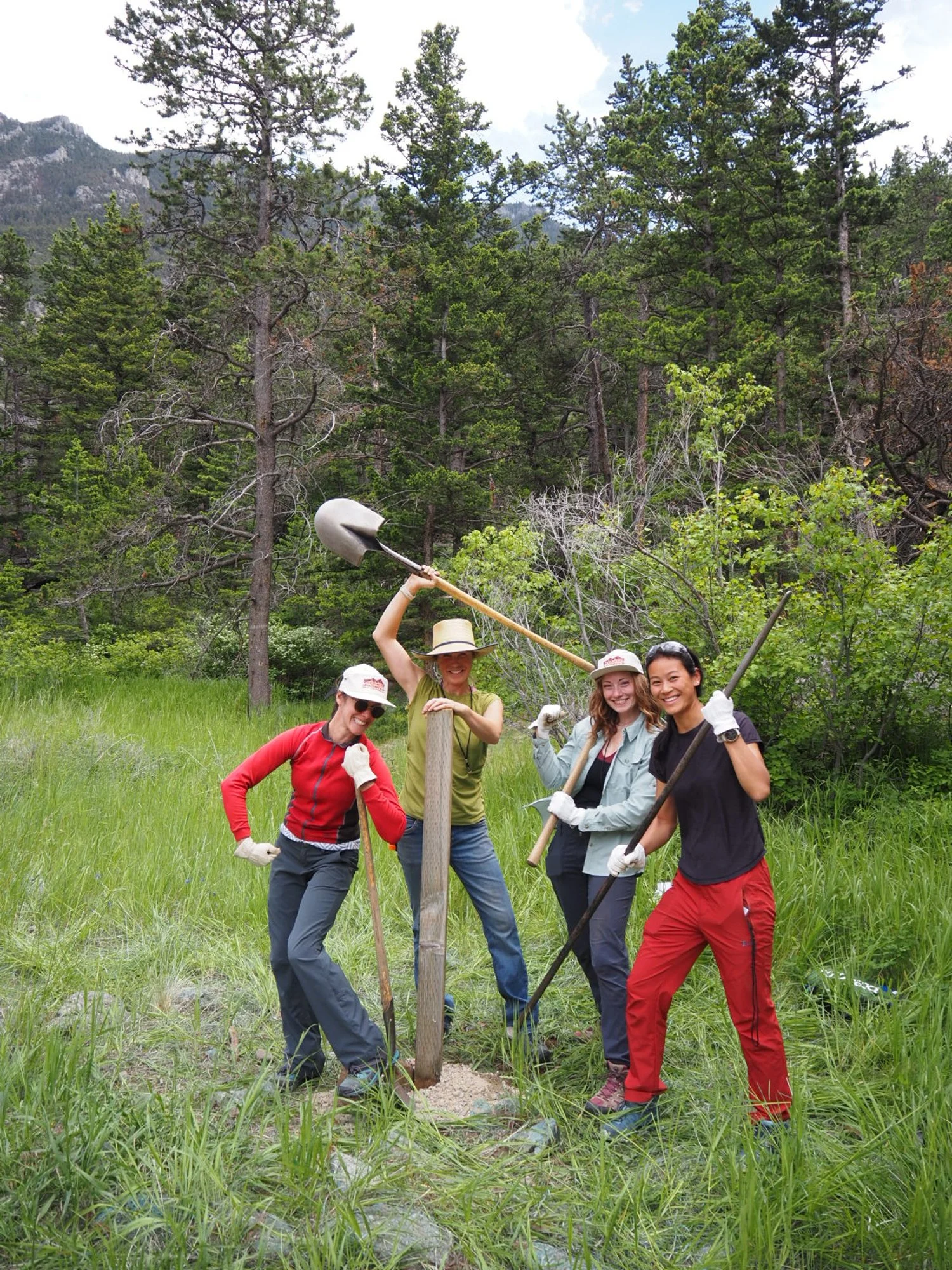
Policies and Preparedness
-
Unfortunately, no. We know your dog is the very best dog, but given the possibility of problems arising between your pet and pack-stock, wildlife, or other volunteers, we do not allow dogs on ABWF trips. Contact staff for information about service animals on trips.
-
No. Firearms and other weapons are absolutely prohibited on volunteer trips. Crew Leaders carry bear spray and have some available for others. There is no need to carry a weapon in the Wilderness. If you feel like you need one, an ABWF volunteer trip is not for you. Animal packers are the exception to this rule and only carry one to respond to an injured equine.
-
The Absaroka and Beartooth Mountains are famous for alpine lakes and streams rich with Yellowstone cutthroat, brookies, goldens, rainbows, cut-bows, and even a few native grayling. We encourage anyone to wet a line in their free time, but remember that a valid Montana fishing license is required for anyone planning to chase wild trout.
-
The entire Absaroka-Beartooth Wilderness is considered occupied grizzly bear habitat. The AB has healthy populations of both grizzly and black bears.
All ABWF trips practice bear awareness and safety including proper food storage and responsible travel in bear country. All participants are required to carry bear spray at all times. ABWF will have some available if you don’t have one and we can provide guidance on how to properly use bear spray.
Volunteers may not carry firearms on any ABWF trip per the Forest Service volunteer agreement and ABWF policy, regardless of whether they are licensed to carry a weapon. The only exception is volunteer packers, who may carry a firearm to respond to emergencies with stock.
-
Alcohol: If you are an adult participating in a volunteer trip, you are welcome to bring a small amount of personal alcohol to enjoy responsibly after work hours, and in a manner leaving you able to work the following day.
Absolutely no glass bottles are allowed, and be prepared to carry in your own personal supply, even on stock-supported trips.
Marijuana and other drugs: While marijuana consumption is now legal in several states, including Montana, it is still illegal on federal lands such as the Forest Service lands where the Absaroka-Beartooth Wilderness is located.
Other illegal drugs are also prohibited on ABWF trips. Anyone participating on a trip is a Forest Service volunteer under a working agreement. Drug use violates that agreement and could leave you liable for any injury, loss, or other issue that occurs.
Plan to spend your trip imbibing on clear mountain air and camaraderie, and please leave your drugs at home.
-
So glad you asked. You probably already know these things, but let’s review. These activities are not permitted on ABWF trips:
possession or use of firearms, except by volunteer packers who’ve been approved by the Forest Service
consumption of alcoholic beverages in excess
possession or use of any federally illegal drugs
fighting, use of derogatory language, intimidating behavior, discrimination, sexual harassment, or violent or threatening behavior
violation of any state game and fish regulation
violation of any federal, state, or local law
disclosing others’ confidential information
bringing pets. Unfortunately, pets are not allowed on volunteer projects. Even if you’re confident in your pet’s behavior, conflicts can still arise. Our primary concern is the safety of your pet, pack stock, wildlife, and fellow volunteers.
Violation of any of the above prohibitions may constitute grounds for dismissal from the project.
-
Being prepared goes a long way; do your part and remember that your choices affect the entire crew. Many projects are at high elevations, in remote settings, and subject to rapid weather changes and possible exposure. Participants are expected to assist with camp chores, adhere to safety requests, and adapt to a shared group environment. Choose your projects wisely, based on your known abilities. No solo hiking is allowed to/from backcountry projects without written authorization.
-
Each crew leader carries an emergency satellite communication device. In the event that a field volunteer needs to be contacted while they are out on a trip, please call the Absaroka Beartooth Wilderness Foundation office. We can typically get a message to our crew within 24 hours. You can also try ABWF staff at any hour in the event of a true emergency. Phone numbers below.
Office: info@abwilderness.org - (406) 445-3037
Joe Josephson, Executive Director - jjosephson@abwilderness.org - (406) 581-1716
Jarret Kostrba, Stewardship Manager - jkostrba@abwilderness.org - (406) 580-2592
Multi-Day BACK COUNTRY ADVENTURES
During our popular summer trail maintenance adventures, volunteers learn traditional skills like use of crosscut saws and trail-building techniques, while participating in meaningful teamwork, connecting with like-minded wilderness enthusiasts, and experiencing the wonders of The AB in a unique and memorable new way.
Each summer, our volunteers venture out to remote corners of the Absaroka-Beartooth Wilderness, saws and pulaskis in hand, to cut logs, clear corridors, maintain water drains and more. By keeping the wilderness trail system in good order, we not only enhance recreation opportunities but also protect the wild lands of the AB from erosion, degradation, and the impacts of overuse.