
A Costco-Sized Portion of Mixed Nuts
Editor’s Note: A earlier version of this piece ran as an op-ed in the Billings Gazette on July 29, 2026. At the time of posting here, seven bears black bears had been euthanized in Red Lodge this season.
—
In late June, the Absaroka Beartooth Wilderness Foundation staff, loaded with saws and shovels, headed up the Lake Fork for our first all-staff stewardship tour. For five miles we worked along the way clearing water bars and managing fire rings. By late afternoon we reached the bridge below Thunder Mountain, the beating heart of the drainage, and a well-used campsite in the trees.
Here, someone had scattered a Costco-sized portion of mixed nuts across the forest floor, a pile thinning into a wide arc, the way you'd broadcast seed across a garden. Maybe it was meant for the squirrels, or simply weight somebody didn't want to carry out. Either way it was a food reward, waiting.
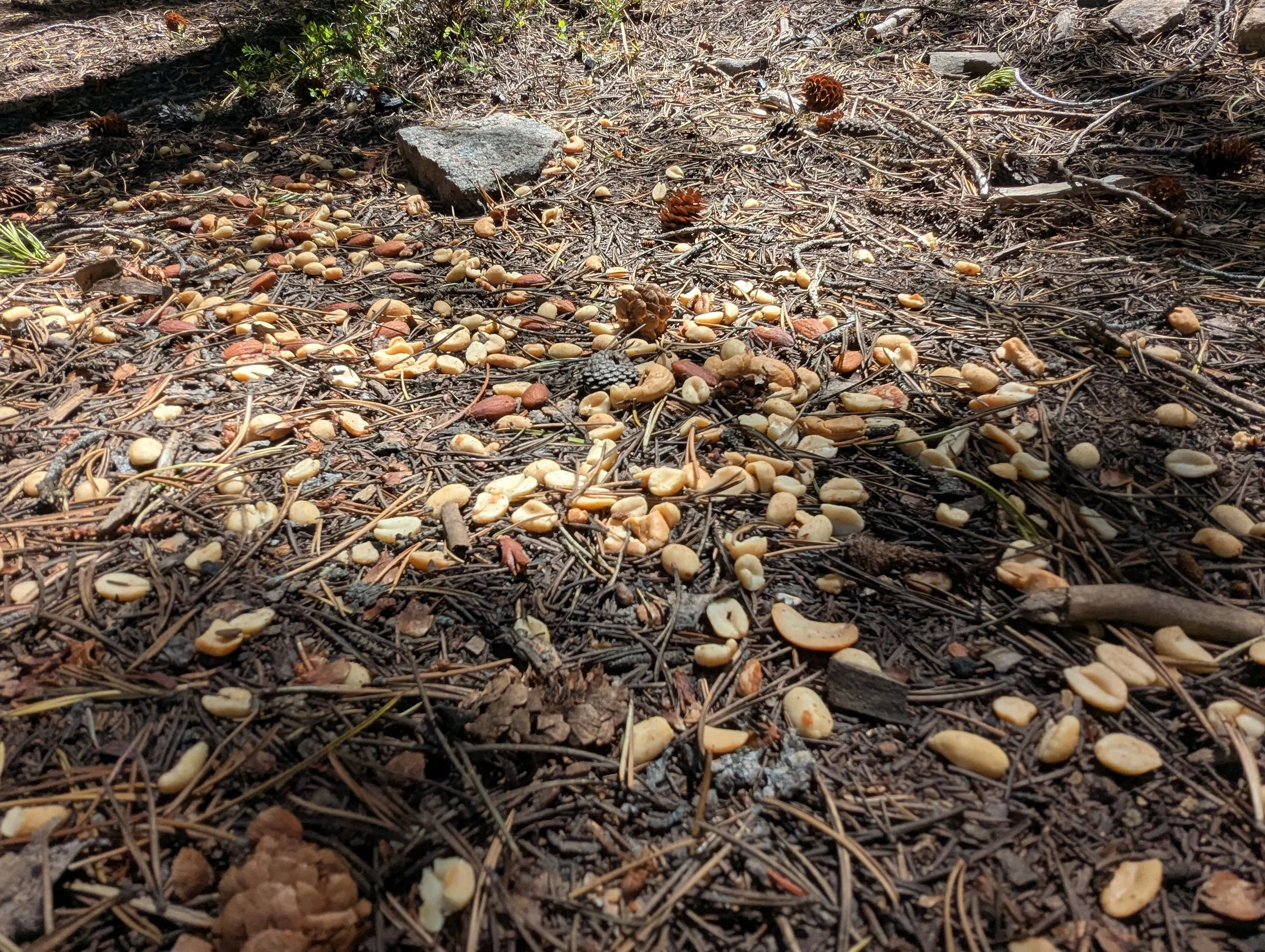
Mixed nuts litter the forest floor at a remote campsite beneath Thunder Mountain in the Absaroka-Beartooth Wilderness.
Over lunch, we talked through our options; we couldn't safely camp beside this cache of protein, carbohydrates, and fat. Should we push on two miles to the next campsite? We still had work to do in the area. So, we spent the next hour picking every nut from the dirt. Only in holding the heft of a bulging ziplock did the scale register: more than half a gallon, over 5,000 calories. For a bear in June scraping by on forbs and roots, nothing it finds in the wild could come close.
Had we left the mess, the local black bear would likely find those nuts, clean up every trace, and remember the spot. So would her cub. The next weekend a family might arrive, kids on their first backpacking trip, and the bears come back for another reward. That is how bear-human conflict begins. Repeated, it ends with dead bears.
The person who left those nuts will never see any of it. The consequences land on the next party, and on the bears. People hurt by bears being bears is exceedingly rare. Bears dying because of human behavior is common.
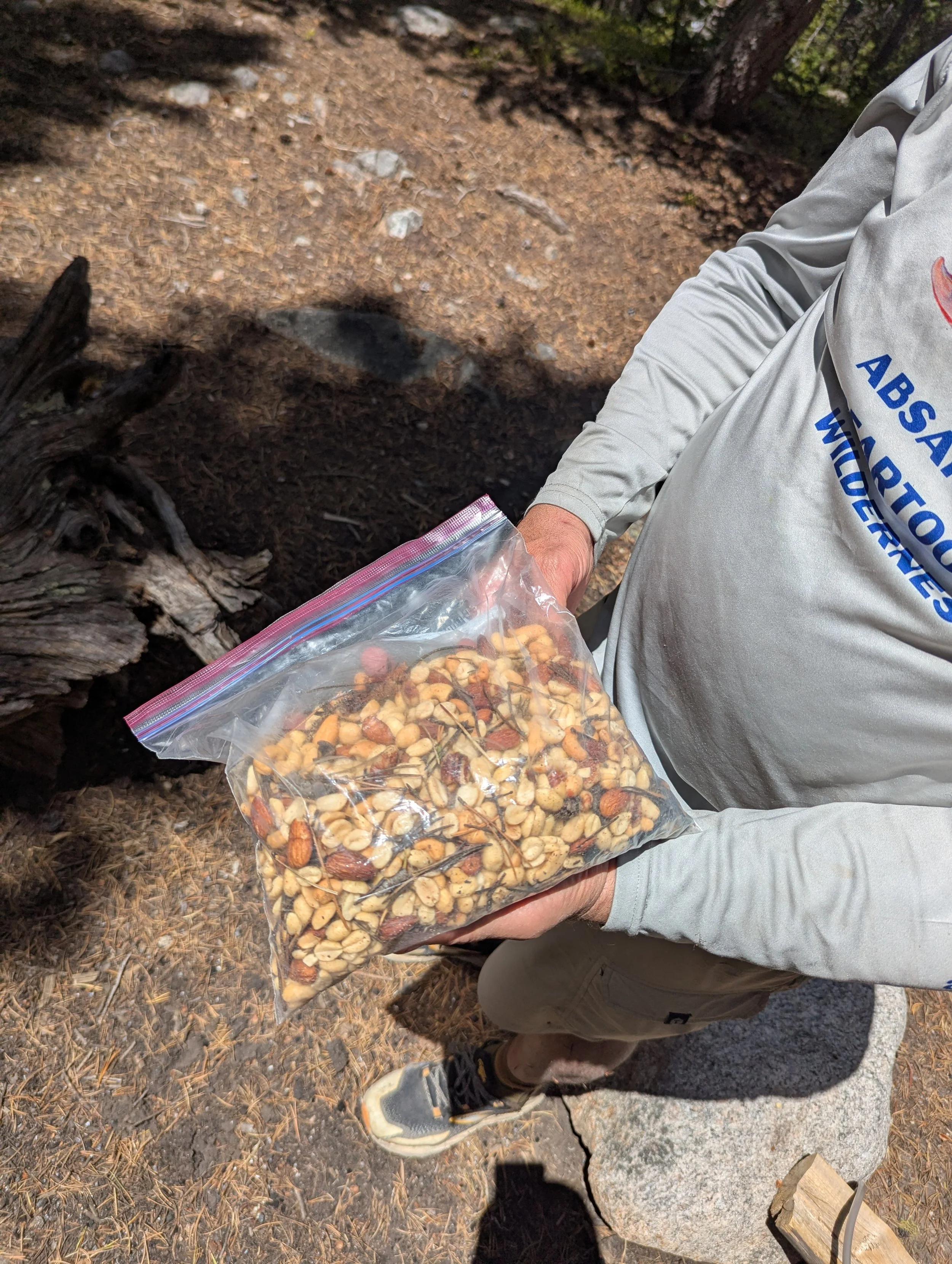
The quantity of scattered nuts, collected by the ABWF team over the course of an hour, equated to roughly 5,000 calories — an irresistible boon for a wild bear scraping by on early-season wild foods.
The same story is unfolding in town. In the Red Lodge area this summer, seven black bears have been euthanized. The headlines never show what comes first: months of hazing and aversive conditioning by Montana Fish, Wildlife & Parks as the agency attempts to correct bad bear behavior before it’s too late. Nearby campgrounds are wrestling with bears of their own. In the front country, that can close a campground or a management unit. In the Wilderness, it can close an entire trail system.
Nobody in these stories is a villain. Vacationers leave garbage not knowing pickup is days away. Locals love their bird feeders. Others mistakenly think feeding bears helps them when conditions are tough. But according to Daniel McHugh, FWP's Region 5 Bear Manager, few bears return to foraging for natural foods after even one human food reward.
By the time a bear makes the news, it has usually been removed. No wonder many never report an encounter, afraid the call to the agency signs the bear's death warrant. McHugh says it is the opposite: "We save way more bears than we have to euthanize. Way more."
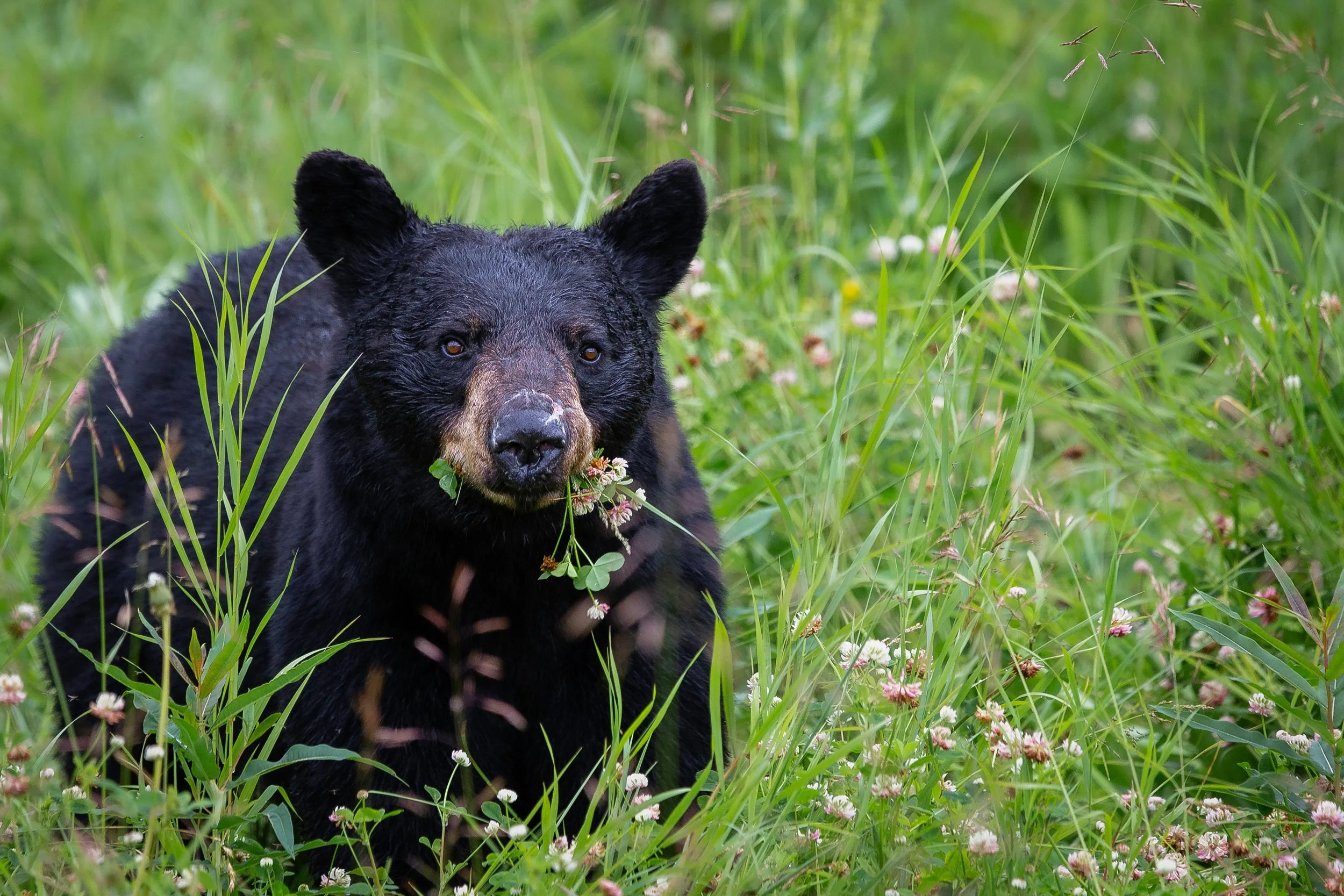
Black bears like this one deserve the chance to live wild, full lives with access to healthy habitat and naturally occurring food sources. Intentionally feeding wildlife—no matter how well intentioned—or being careless with attractants can be a death sentence for our wild neighbors.
Photo: Pete Nuij
ABWF's work lives in the wilderness, but bear safety doesn't stop at the boundary—and neither does responsibility. Proper food storage is the difference between a bear that stays wild and whose life is cut short. During a year when bears are struggling, it becomes even more imperative that we give them no chance to become habituated to human foods. Don’t be the reason a bear loses its life.
So here is my ask: if a bear gets human food or trash, in the depths of the Wilderness or just birdseed at your Airbnb, or approaches people, report it, even if nothing went wrong. An early call to (406) 850-1131 gives managers time to correct the behavior while there's still a bear to save.
It took five of us an hour on the forest floor to make one campsite safe. It takes all of us to keep bears wild.